Healthy Meal Prep Ideas for Beginners: Your Easy Guide
healthy meal prep ideas for beginners

Healthy Meal Prep Ideas for Beginners: Your Easy Guide

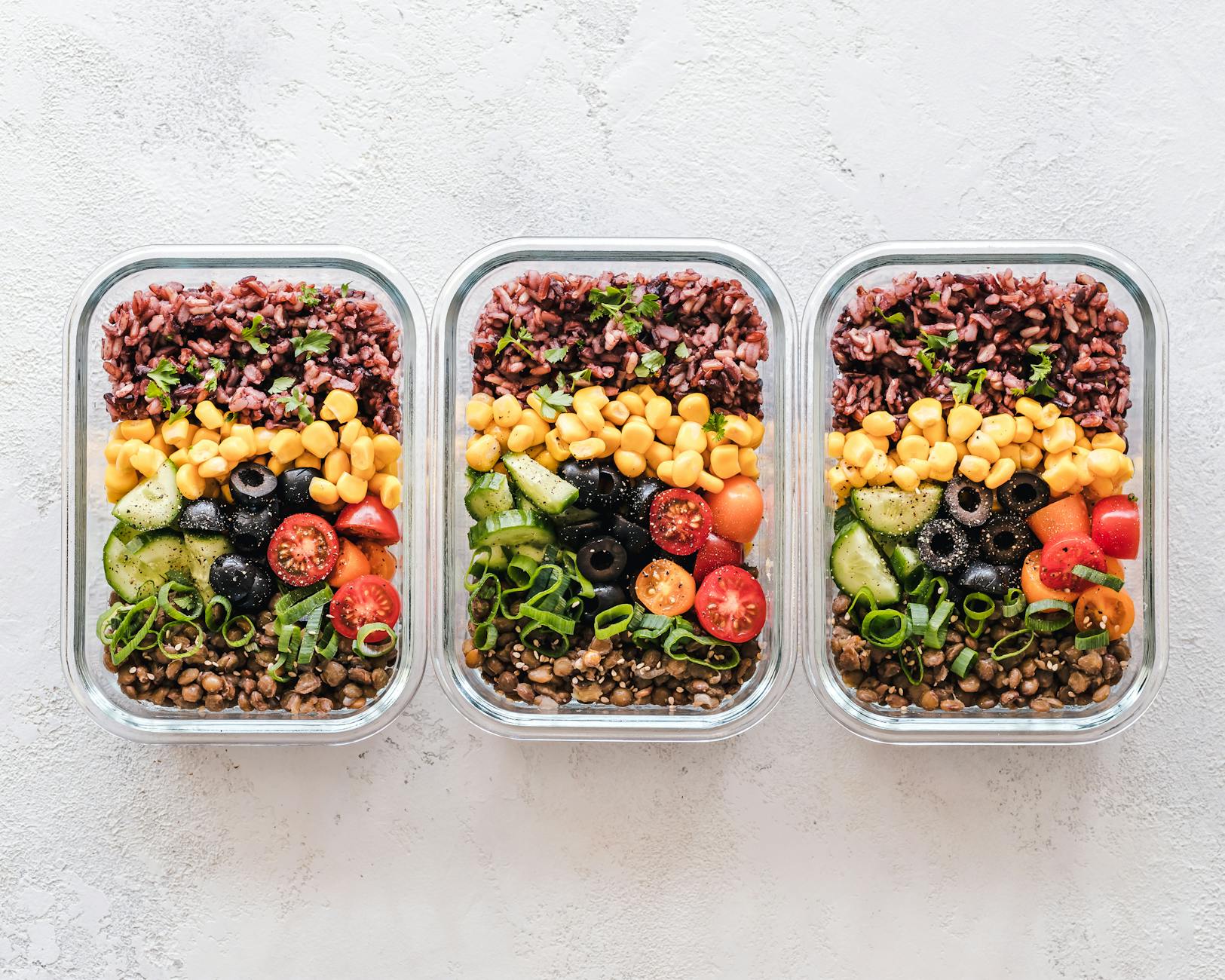
Colorful healthy meal prep with corn, olives, tomatoes, and lentils in glass containers. Perfect for mindful eating.Photo: Ella Olsson / Pexels

Healthy Meal Prep Ideas for Beginners: Your Easy Guide

Transform your eating habits and simplify your week with these practical, delicious, and beginner-friendly meal prep strategies.

Start Prepping Now!

Key Takeaways

  • ✓ Meal prepping saves an average of 4-6 hours per week.
  • ✓ It can reduce food waste by up to 25%.
  • ✓ Studies show meal preppers consume more fruits and vegetables.
  • ✓ Beginner meal prep focuses on simple, repeatable recipes and techniques.

How It Works

1
Plan Your Meals

Decide what you want to eat for the week, focusing on balanced meals. Consider your schedule and ingredient availability.

2
Shop Smart

Create a detailed grocery list based on your meal plan to avoid impulse buys. Stick to your list to save money and time.

3
Prep & Cook

Dedicate a block of time, typically 2-3 hours, to wash, chop, and cook your ingredients. Focus on foundational components first.

4
Portion & Store

Divide your cooked meals into individual portions using airtight containers. Store them properly in the fridge or freezer for easy access.

Why Embrace Beginner Meal Planning for a Healthier You?

Focused woman in apron writing recipes in a cookbook in a stylish kitchen.Photo: Katya Wolf / Pexels
Embarking on the journey of healthy meal prep can feel daunting, especially for beginners. The sheer volume of recipes, techniques, and storage solutions available might seem overwhelming at first glance. However, the core principle of meal planning is beautifully simple: preparing food in advance to save time, reduce stress, and ensure you consistently eat nutritious meals throughout your week. For those new to this practice, understanding the 'why' behind meal prep is just as crucial as the 'how.' It’s not merely about cooking in bulk; it's about reclaiming control over your diet, your budget, and your precious time. One of the most compelling reasons to adopt beginner meal planning is the undeniable impact it has on your health. In our fast-paced lives, convenience often trumps nutrition, leading us to rely on takeout, processed foods, or skipped meals. These choices can contribute to fluctuating energy levels, weight gain, and a general feeling of sluggishness. By setting aside a few hours each week to prepare healthy meals, you're proactively choosing nutrient-dense options. You'll find yourself reaching for a pre-portioned salad with grilled chicken instead of a greasy burger, or a hearty lentil soup instead of a frozen pizza. This consistent intake of wholesome ingredients — fresh vegetables, lean proteins, and complex carbohydrates — provides your body with the fuel it needs to function optimally, boosting your energy, improving digestion, and supporting weight management goals. Moreover, knowing exactly what ingredients go into your food gives you peace of mind, especially if you have dietary restrictions or are trying to avoid certain additives. Beyond the direct health benefits, meal prepping offers significant advantages in terms of time and financial management. Imagine coming home after a long day, tired and hungry, only to remember that dinner is already prepared and waiting. This eliminates the decision fatigue, the temptation to order expensive delivery, and the time spent cooking from scratch every single night. While the initial investment of time on your prep day might seem significant, it pales in comparison to the cumulative hours you save throughout the week. Furthermore, strategic meal planning drastically reduces food waste. When you plan your meals and shop with a precise list, you buy only what you need, minimizing forgotten produce wilting in the back of your fridge. This not only saves money but also contributes to a more sustainable lifestyle. For more insights on efficient shopping, explore these smart grocery shopping tips. The financial savings can be substantial, as eating out frequently is often far more costly than preparing meals at home. By embracing beginner meal planning, you're not just cooking; you're investing in your well-being, your finances, and a less stressful daily routine. It's a foundational habit that empowers you to make healthier choices, even when life gets hectic.

Essential Tools and Core Principles for Successful Meal Prep

Colorful healthy meal prep with corn, olives, tomatoes, and lentils in glass containers. Perfect for mindful eating.Photo: Ella Olsson / Pexels
Before diving into specific recipes and techniques, equipping yourself with the right tools and understanding fundamental principles will set you up for long-term success in healthy meal prep. You don't need a professional kitchen, but a few key items will make the process much smoother and more efficient. First and foremost, quality food storage containers are paramount. Look for airtight, microwave-safe, and dishwasher-safe options, preferably made of glass, which is non-porous, doesn't stain, and lasts longer than plastic. Various sizes are useful for different components – larger ones for full meals, smaller ones for snacks or sauces. A good set of sharp knives is another non-negotiable; they make chopping vegetables a breeze and significantly reduce prep time. A large cutting board, preferably non-slip, is essential for safety and efficiency. Beyond these, consider investing in a large sheet pan for roasting vegetables and proteins simultaneously, a spacious pot for cooking grains or soups, and a reliable food scale for accurate portioning. While not strictly necessary for beginners, an Instant Pot or slow cooker can be game-changers for hands-off cooking of stews, chilis, or shredded meats, further simplifying your prep day. Once you have your tools, let's explore the core principles that underpin effective healthy meal prepping for beginners. The first principle is **simplicity**. Don't try to prepare gourmet meals or an entirely different dish for every day of the week. Start with familiar recipes that you enjoy and that don't require complex techniques or obscure ingredients. Focus on dishes that can be easily scaled up and that hold well in the refrigerator for 3-4 days. Think roasted vegetables, grilled chicken breasts, hard-boiled eggs, or quinoa salads. The goal is to build confidence and establish a routine, not to become a Michelin-star chef overnight. Secondly, embrace the concept of **component prepping**. Instead of preparing full meals, sometimes it's more efficient to cook individual components that can be mixed and matched throughout the week. For example, roast a large batch of sweet potatoes, cook a big pot of brown rice, bake several chicken breasts, and chop a variety of raw vegetables. This allows for flexibility and variety, preventing meal fatigue. One day, your chicken and rice might be paired with roasted veggies; the next, the chicken could be shredded for a salad, and the rice used in a stir-fry. This approach is excellent for beginners as it reduces the pressure of creating perfect, complete meals from the outset. Finally, **consistency and flexibility** are key. Choose a dedicated day and time each week for your meal prep session, whether it's Sunday afternoon or Wednesday evening. Treat it as an important appointment. Over time, you'll develop a rhythm and become more efficient. However, also allow for flexibility. Life happens, and sometimes your prep day might get derailed. Don't let perfection be the enemy of good. Even prepping a few components, like washing greens or chopping onions, is better than nothing. The aim is to build a sustainable habit that supports your healthy lifestyle, not to create an additional source of stress. Remember, meal prep is a journey of continuous learning and adaptation, and these foundational principles will guide you every step of the way.

Delicious and Easy Healthy Meal Prep Ideas for Beginners
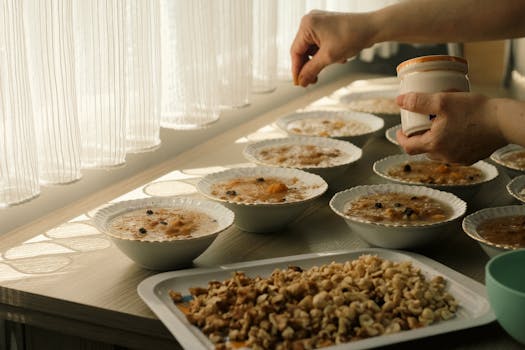
Person adding toppings to bowls of oatmeal on a sunlit table, featuring nuts and raisins.Photo: Şevval Çadır / Pexels
Now that you understand the 'why' and the foundational principles, let's dive into some concrete, delicious, and genuinely easy healthy meal prep ideas for beginners. The key here is focusing on versatile recipes that utilize common ingredients and straightforward cooking methods. These ideas are designed to be customizable, allowing you to adapt them to your taste preferences and dietary needs. Remember, the goal is to create nourishing meals without spending hours in the kitchen. **Breakfast Powerhouses:** Start your day right with pre-prepped options. Overnight oats are a classic for a reason: combine rolled oats, milk (dairy or non-dairy), chia seeds, and your choice of fruit and sweetener in a jar. Let it sit overnight, and breakfast is ready! You can make several jars at once. Another excellent option is baked egg muffins. Whisk eggs with chopped vegetables (spinach, bell peppers, onions) and a little cheese, pour into a greased muffin tin, and bake until set. These are perfect for a grab-and-go protein-packed breakfast. You can make a batch of 12 and store them in the fridge for up to 4 days. Pair them with some pre-washed berries for a complete meal. For those who prefer something lighter, portion out Greek yogurt with granola and fruit into separate containers, ready to combine in the morning. **Lunch & Dinner Staples: Mix-and-Match Bowls:** This is where component prepping truly shines. The 'bowl' concept is incredibly flexible and prevents meal fatigue. The basic formula is: **Grain + Protein + Vegetable + Healthy Fat/Sauce**. * **Grains:** Cook a large batch of brown rice, quinoa, farro, or even whole wheat pasta. These are excellent bases that hold up well for several days. For example, a large pot of quinoa can be ready in about 15-20 minutes and provide a base for 4-5 meals. * **Proteins:** Opt for lean proteins that are easy to cook in bulk. Baked or grilled chicken breast (slice or shred after cooking), roasted salmon fillets, hard-boiled eggs, canned tuna, or cooked lentils and chickpeas are fantastic choices. For example, season chicken breasts with salt, pepper, garlic powder, and paprika, then bake at 400°F (200°C) for 20-25 minutes. Let cool before storing. * **Vegetables:** Roasting is your best friend here. Chop a variety of hearty vegetables like broccoli, cauliflower, bell peppers, sweet potatoes, and Brussels sprouts. Toss them with olive oil, salt, and pepper, and roast on a large sheet pan at 400°F (200°C) until tender-crisp. You can also steam green beans or asparagus, or simply chop raw veggies like cucumbers and cherry tomatoes to add fresh crunch. Don't forget pre-washed greens like spinach or mixed lettuce for salads. * **Healthy Fats/Sauces:** These add flavor and moisture. Think a simple vinaigrette (pre-made or whisked from olive oil, vinegar, and herbs), hummus, guacamole (store individual portions with lime juice to prevent browning), or a homemade peanut sauce. Store sauces separately and add them just before eating to prevent sogginess. For more inspiration, check out these easy weeknight dinner recipes that can be adapted for meal prep. **Sample Meal Prep Week using the Bowl Concept:** 1. **Protein:** 1.5 lbs baked chicken breast (sliced) 2. **Grain:** 3 cups cooked quinoa 3. **Veggies:** Large batch of roasted broccoli and sweet potatoes, plus a container of mixed greens 4. **Sauce:** Homemade lemon-tahini dressing With these components, you can create: * **Lunch Day 1-3:** Quinoa, chicken, roasted veggies, lemon-tahini dressing. * **Dinner Day 1-2:** Large salad with mixed greens, chicken, roasted veggies, and dressing. This approach provides flexibility and keeps things interesting. Remember to experiment with different flavor profiles and ingredients as you gain confidence. Start small, perhaps just prepping lunches for three days, and gradually increase as you become more comfortable. The beauty of meal prep is that it adapts to you, not the other way around.

Common Beginner Meal Prep Mistakes and How to Avoid Them

Close-up of a young woman with afro expressing a pensive mood against a green background.Photo: Tima Miroshnichenko / Pexels
Even with the best intentions, beginners can fall into common meal prep pitfalls that lead to frustration and giving up. Recognizing these mistakes beforehand can help you navigate your journey to healthier eating more smoothly. Avoiding these errors will not only save you time and money but also ensure that your meal prep efforts are sustainable and enjoyable. **1. Overcomplicating Recipes:** This is arguably the most frequent mistake. New preppers often jump into complex recipes with long ingredient lists or intricate cooking steps. The result is a lengthy, stressful prep session that feels more like a chore than a helpful habit. * **Solution:** Start simple. Choose recipes with 5-7 main ingredients and straightforward instructions. Focus on single-sheet pan meals, basic grilled proteins, or simple grain salads. Master a few easy recipes before gradually adding more complexity. **2. Not Having a Plan (or a Shopping List):** Wasting time wandering through grocery aisles or realizing you're missing a crucial ingredient mid-prep can be incredibly discouraging. * **Solution:** Dedicate 15-20 minutes to planning your meals for the week. Write down each meal and then create a detailed grocery list based on those recipes. Stick to your list at the store. This saves time, money, and reduces stress. **3. Ignoring Food Safety and Storage:** Improper storage can lead to food spoilage, potential health risks, and wasted effort. Not chilling food quickly enough or using inappropriate containers are common issues. * **Solution:** Invest in good quality, airtight containers (preferably glass). Ensure cooked food cools down within two hours before refrigerating. Most prepped meals are good for 3-4 days in the fridge. Label containers with dates to keep track. For longer storage, utilize your freezer effectively. **4. Lack of Variety Leading to Burnout:** Eating the exact same meal for five days straight can quickly lead to meal fatigue, making you crave unhealthy alternatives. * **Solution:** Embrace component prepping. Cook individual proteins, grains, and vegetables that can be mixed and matched. Vary your sauces and seasonings throughout the week to create different flavor profiles from the same base ingredients. For example, chicken can be seasoned differently for an Asian-inspired bowl vs. a Mediterranean one. **5. Trying to Prep Everything at Once:** Attempting to prepare breakfast, lunch, dinner, and snacks for seven days on your very first prep session is a recipe for exhaustion and overwhelm. * **Solution:** Start small. Begin by prepping just one meal (e.g., lunches for three days) or just a few components. As you get more comfortable and efficient, gradually increase the amount you prep. Consistency in smaller steps is more effective than attempting too much and burning out. **6. Forgetting Snacks:** Healthy snacking is crucial for maintaining energy levels and preventing overeating at main meals. Neglecting to prep snacks can lead to reaching for unhealthy, convenient options. * **Solution:** Include healthy snacks in your meal plan. Portion out nuts, fruit, vegetable sticks with hummus, or hard-boiled eggs. These are quick to prepare and can make a big difference in your daily nutrition. By being mindful of these common mistakes and implementing these solutions, you'll be well on your way to a sustainable and successful healthy meal prep routine.

Comparison

FeatureHomemade Meal PrepStore-Bought Meal KitsRestaurant Takeout
Cost per MealLowMedium-HighHigh
CustomizationHighMediumLow
Nutritional ControlHighMedium-HighLow
Time Commitment (Prep Day)Medium-HighLowNone
Skill Level RequiredLow (for beginners)LowNone
Food WasteLowMediumMedium-High
Variety of OptionsHigh (with planning)MediumVery High

What Our Readers Say

5 ★★★★★

"These healthy meal prep ideas for beginners completely changed my week! I used to stress about dinner every night, but now I have delicious, nutritious meals ready. It's so much easier than I thought."

5 ★★★★★

"As someone who hated cooking, the component prepping strategy was a game-changer. I can now throw together healthy lunches in minutes. My energy levels are consistently higher."

5 ★★★★★

"Following these beginner meal prep tips, I've saved over $100 a month on food and finally started eating more vegetables. The baked egg muffins are a revelation for busy mornings!"

4 ★★★★☆

"The ideas are great for getting started, though I found I still needed to tweak some recipes to fit my specific dietary needs. Still, a solid foundation for healthy eating."

5 ★★★★★

"I used to rely on fast food during my lunch breaks at work. Now, with these simple healthy meal prep ideas for beginners, I bring my own food and feel so much better. It's truly revolutionized my diet."

Frequently Asked Questions

What are the absolute easiest healthy meal prep ideas for beginners?
The easiest ideas for beginners focus on simple, repeatable components. Think roasted vegetables, baked chicken breast, hard-boiled eggs, and cooked grains like quinoa or brown rice. These can be combined in various ways throughout the week to create different meals without complex cooking.
I'm worried about food getting boring or going bad. How can I prevent this?
To prevent boredom, use the 'component prep' method and vary your seasonings or sauces daily. To prevent spoilage, ensure food is cooled quickly and stored in airtight containers in the fridge for no more than 3-4 days. You can also freeze portions for longer storage.
How do I start meal prepping if I have very little time?
Start small! Dedicate just one hour to prep one meal (like lunches) for 2-3 days. Focus on simple tasks like chopping vegetables, cooking a batch of grains, or baking chicken. As you get faster, you can gradually increase your prep time and quantity.
Is healthy meal prep more expensive than just buying food daily?
No, healthy meal prep is generally much more cost-effective. By planning your meals and shopping with a list, you reduce impulse purchases and food waste. Eating out, even at fast-casual restaurants, typically costs significantly more per meal than cooking at home.
How does meal prepping compare to using a meal kit delivery service?
Meal prepping offers greater control over ingredients, portion sizes, and cost compared to meal kits. While meal kits provide convenience by delivering pre-portioned ingredients, they are often more expensive and limit your flexibility. Meal prepping puts you fully in charge of your healthy eating journey.
Who should definitely try healthy meal prep ideas for beginners?
Anyone looking to save time during busy weekdays, reduce food expenses, improve their diet quality, or gain more control over their eating habits should try healthy meal prep. It's particularly beneficial for those with demanding schedules or specific health goals.
Are there any health risks associated with meal prepping?
The main risk is improper food handling and storage, which can lead to bacterial growth. To mitigate this, ensure food is cooked to safe temperatures, cooled rapidly (within 2 hours), and stored in clean, airtight containers in the refrigerator or freezer. Adhering to these guidelines makes meal prepping very safe.
What's the future trend for healthy meal prep?
The future of healthy meal prep is likely to involve more automation with smart kitchen appliances, increased focus on sustainable and plant-based options, and personalized meal plans driven by AI to cater to individual dietary needs and preferences, making it even more accessible and efficient.

Ready to transform your eating habits and simplify your life? Dive into these healthy meal prep ideas for beginners and discover how easy and rewarding it can be to nourish your body with delicious, home-cooked meals. Start your journey today and experience the benefits of a well-prepped week!

Topics: healthy meal prep ideas for beginnerseasy meal prep recipesbeginner meal planningweekly meal prep tipsnutritious batch cooking
Leo List
Brampton weed
Adultwork