The Real Difference Between Organic and Natural Food
difference between organic and natural food

The Real Difference Between Organic and Natural Food

Navigate the confusing world of food labels to make informed choices for your health and the planet.

Understand the Labels

Key Takeaways

  • ✓ Organic food adheres to strict USDA regulations regarding farming, processing, and handling.
  • ✓ The term 'natural' has no official, regulated definition from the FDA for most food products.
  • ✓ Organic certification prohibits synthetic pesticides, fertilizers, GMOs, and growth hormones.
  • ✓ Natural labeling primarily focuses on the absence of artificial ingredients, colors, or flavors.

How It Works

1
Understand Organic Certification

Learn about the USDA Organic seal and its comprehensive requirements for agricultural practices. This involves soil quality, animal raising practices, and pest control methods.

2
Decipher 'Natural' Claims

Recognize that 'natural' is a marketing term with minimal regulatory backing, often implying a lack of artificial components. It doesn't address farming methods or pesticide use.

3
Prioritize Your Values

Decide what's most important to you: avoiding pesticides, supporting sustainable farming, or simply avoiding artificial additives. Your budget and dietary needs will also play a role.

4
Read Ingredient Labels

Always scrutinize the ingredient list and nutrition facts, regardless of marketing claims. This is the most reliable way to know what's in your food.

Demystifying 'Organic': The USDA's Gold Standard

Person shopping at a zero waste store with organic products in reusable containers. Eco-friendly lifestyle. Photo: Sarah Chai / Pexels
The term 'organic' is arguably one of the most recognized and, simultaneously, most misunderstood labels in the grocery store. Unlike its 'natural' counterpart, 'organic' is a heavily regulated term in the United States, backed by the U.S. Department of Agriculture (USDA) National Organic Program (NOP). This program sets forth a comprehensive set of standards that farmers, ranchers, and food processors must meet to earn and maintain organic certification. When you see the green and white USDA Organic seal, it signifies a commitment to specific practices designed to foster ecological balance and conserve biodiversity. These practices include, but are not limited to, the avoidance of synthetic fertilizers, pesticides, and herbicides. Instead, organic farmers rely on natural substances and physical, mechanical, or biologically based farming methods. For example, crop rotation, composting, and cover cropping are common strategies to maintain soil fertility and manage pests naturally. Understanding sustainable food practices is crucial here. Livestock raised organically must be fed 100% organic feed, have access to the outdoors, and cannot be given antibiotics or growth hormones. Processed organic products must contain at least 95% organic ingredients, excluding water and salt, and cannot contain artificial preservatives, colors, or flavors. Furthermore, organic production prohibits the use of genetically modified organisms (GMOs) and irradiation, which uses radiation to preserve food or eliminate pests. The entire supply chain, from farm to table, is subject to annual inspections to ensure compliance with these stringent regulations. This rigorous oversight is what gives the organic label its credibility and differentiates it significantly from other food claims. Consumers often choose organic products for perceived health benefits, environmental concerns, or ethical considerations regarding animal welfare. The investment in organic farming practices often translates to a higher price point for organic goods, reflecting the additional labor, time, and resources required to adhere to these standards. It's a system built on transparency and accountability, aimed at providing consumers with a clear understanding of how their food was produced. This clear framework is a stark contrast to the ambiguity surrounding many 'natural' claims, making 'organic' a more reliable indicator of specific production methods. The USDA Organic seal is not just a marketing ploy; it's a legal and verifiable claim about the integrity of the food you're purchasing, offering a level of assurance that few other labels can match.

The Elusive Definition of 'Natural': A Marketing Minefield

Neatly arranged glass jars holding kitchen staples like pasta and grains on a wooden counter. Photo: cottonbro studio / Pexels
In stark contrast to the well-defined 'organic' label, the term 'natural' on food packaging is far more ambiguous and largely unregulated by the U.S. Food and Drug Administration (FDA). While consumers often interpret 'natural' to mean that a product is minimally processed, free of artificial ingredients, and perhaps even grown or raised without pesticides, the reality is far less stringent. For most food products, the FDA has a long-standing policy concerning the use of 'natural' that states it means 'nothing artificial or synthetic (including all color additives regardless of source) has been included in, or has been added to, a food that would not normally be expected to be in that food.' This definition, however, comes with significant loopholes and a lack of enforcement. For instance, it doesn't address production methods, pesticide use, genetic engineering, or animal welfare. A product labeled 'natural' could still come from animals raised with antibiotics or growth hormones, or from crops sprayed with synthetic pesticides. It could also contain GMO ingredients, as the FDA does not consider genetic engineering to be 'synthetic' in the context of this definition. The confusion surrounding 'natural' has led to numerous consumer lawsuits over the years, challenging companies' use of the term on products that contain ingredients like high-fructose corn syrup, artificial flavors, or even synthetic preservatives. While the FDA has sought public comments on establishing a formal definition for 'natural,' a clear and legally binding standard has yet to be implemented for most food categories. The only exception where 'natural' has some regulatory weight is for meat and poultry, where the USDA defines 'natural' as products containing no artificial ingredients or colorings and only minimally processed. However, even this definition does not extend to how the animals were raised or fed. This lack of a unified, comprehensive definition across all food categories makes 'natural' a largely unreliable indicator for consumers seeking specific production standards. It's primarily a marketing term designed to evoke a sense of wholesomeness and purity, often without the substance to back it up. Consumers are left to infer meaning, which can lead to misconceptions and potentially misleading purchasing decisions. Therefore, when encountering a 'natural' label, it's essential to exercise skepticism and delve deeper into the ingredient list and, if available, the specific claims made by the manufacturer, rather than relying solely on the broad appeal of the word itself.

Navigating Nutritional Value and Environmental Impact
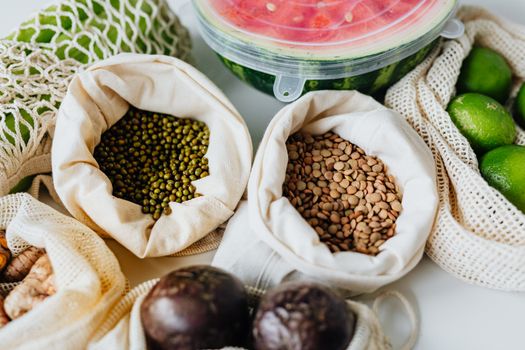
Assorted sustainable produce and grains in reusable bags promoting eco-friendly living. Photo: https://kaboompics.com/ / Pexels
Beyond the regulatory definitions, consumers often wonder about the practical implications of choosing organic versus natural foods, particularly concerning nutritional value and environmental impact. When it comes to nutritional content, the scientific consensus is not entirely clear-cut. While some studies suggest organic foods may have slightly higher levels of certain vitamins, minerals, and antioxidants due to differences in soil quality and stress responses in plants, other studies find no significant nutritional difference between organic and conventionally grown produce. The nutritional profile of any food is influenced by numerous factors, including variety, soil type, climate, harvest time, and storage conditions, making it challenging to isolate the 'organic' factor alone. Therefore, focusing on a diverse diet rich in fruits, vegetables, and whole grains, regardless of organic status, is generally considered the most impactful strategy for nutritional well-being. However, the environmental impact presents a more distinct difference. Organic farming practices are inherently designed to be more environmentally friendly. By eschewing synthetic pesticides and fertilizers, organic agriculture reduces chemical runoff into waterways, protects beneficial insects and pollinators, and minimizes soil erosion. It also emphasizes biodiversity, promoting a healthier ecosystem on and around farms. The absence of GMOs in organic production also avoids potential concerns related to genetic drift and herbicide-resistant weeds. Exploring local food systems can further enhance environmental benefits. In contrast, 'natural' labeled foods offer no such guarantees regarding environmental practices. Their production could still involve intensive conventional farming methods that rely heavily on synthetic inputs, potentially contributing to environmental degradation. Consumers prioritizing ecological sustainability and reduced exposure to agricultural chemicals will find organic certification a more reliable indicator of environmentally responsible food production. The organic system strives for a holistic approach to farming that considers the long-term health of the planet, aiming to create a sustainable agricultural model. This includes promoting soil health, which is vital for carbon sequestration and mitigating climate change. While organic practices are not without their own challenges, such as potentially lower yields in some cases, their fundamental principles align with broader environmental conservation goals. The choice between organic and natural, from an environmental perspective, is thus a choice between a regulated, environmentally conscious system and a largely unregulated one.

Making Informed Choices: Tips for the Savvy Shopper

Shopping cart in a vibrant supermarket aisle in Padova, Italy. Photo: Christian Naccarato / Pexels
Given the complexities of food labeling, becoming a savvy shopper requires more than just glancing at the front of a package. Here are practical tips to help you make informed decisions when navigating the grocery aisles:
  • Prioritize the USDA Organic Seal: If avoiding synthetic pesticides, GMOs, and antibiotics/hormones in animal products is a priority, look for the official USDA Organic seal. This is your strongest guarantee of adherence to strict standards.
  • Read Ingredient Lists Carefully: Regardless of any 'natural' claims, always check the ingredient list. Look for whole, recognizable ingredients and be wary of long lists of unpronounceable chemicals, artificial colors, or excessive sugars.
  • Understand 'Natural' is Not 'Organic': Do not confuse 'natural' with 'organic.' They are distinct terms with vastly different regulatory meanings. A 'natural' product can still contain pesticides or GMOs.
  • Focus on Whole Foods: The best way to ensure you're eating well is to prioritize whole, unprocessed foods like fresh fruits, vegetables, lean proteins, and whole grains. These items often don't even carry 'natural' or 'organic' labels but are inherently healthy.
  • Consider 'Clean Label' Products: Some brands are moving towards 'clean label' initiatives, which focus on minimal ingredients, easily understandable names, and the absence of artificial additives. While not regulated, it often signifies a company's commitment to transparency.
  • Know Your Dirty Dozen and Clean Fifteen: The Environmental Working Group (EWG) annually publishes lists of produce with the highest and lowest pesticide residues. If budget is a concern, consider buying organic for the 'Dirty Dozen' and conventional for the 'Clean Fifteen.'
  • Ask Questions: If you're at a farmer's market, don't hesitate to ask farmers about their growing practices. Direct communication can provide valuable insights that labels cannot.
  • Educate Yourself: Stay updated on food labeling regulations and consumer advocacy groups that monitor food industry practices. Knowledge is your most powerful tool.
By adopting these strategies, you can move beyond misleading marketing terms and make choices that truly align with your health goals, ethical considerations, and environmental values.

Comparison

FeatureOrganic FoodNatural FoodConventional Food
USDA RegulationStrict (USDA NOP)Minimal/None (FDA guidance)General food safety
Synthetic Pesticides/FertilizersProhibitedPermittedPermitted
GMOsProhibitedPermittedPermitted
Antibiotics/Growth Hormones (Animals)ProhibitedPermittedPermitted
Artificial Ingredients/PreservativesProhibited (most)Generally ProhibitedPermitted
Environmental Impact FocusHigh (biodiversity, soil health)None specifiedVaried
Certification/VerificationRequired (third-party)NoneNone
Cost (generally)HigherSimilar to conventional/Slightly higherLower

What Readers Say

"Before reading this, I truly thought 'natural' meant almost the same as 'organic.' Now I understand the big difference between organic and natural food and why the USDA seal is so important for my family's health."

Sarah J. · Austin, TX

"This article clarified so much! I used to fall for the 'natural' labels, but now I know to look for organic certification, especially for produce. It's helped me make much better choices."

Mark T. · Portland, OR

"I was always confused by the marketing jargon. This guide on the difference between organic and natural food provided clear, actionable advice. My grocery bills are more intentional now, focusing on true organic when it matters most."

Emily R. · Denver, CO

"While I appreciate the detailed explanation of the difference between organic and natural food, I wish there was more discussion on the cost-benefit analysis for every single food item. Still, a very informative read."

David L. · Miami, FL

"As someone with food sensitivities, understanding the strict regulations behind organic, particularly regarding GMOs and pesticides, is a game-changer. This article armed me with the knowledge to shop smarter."

Jessica M. · Seattle, WA

Frequently Asked Questions

What is the primary difference between organic and natural food?

The primary difference lies in regulation and scope. 'Organic' is a legally defined and heavily regulated term by the USDA, covering farming practices, pest control, and processing. 'Natural,' for most foods, is a loosely defined marketing term by the FDA, primarily meaning no artificial ingredients, but without addressing farming methods or pesticide use.

Does 'natural' mean a food is pesticide-free?

No, a 'natural' label does not guarantee that a food is pesticide-free. Crops labeled 'natural' can still be grown using synthetic pesticides and fertilizers. Only organic certification ensures that synthetic pesticides are prohibited in its production.

How can I tell if a food is truly organic?

To ensure a food is truly organic, look for the green and white USDA Organic seal on the packaging. This seal indicates that the product has been certified to meet the strict standards of the USDA's National Organic Program.

Is organic food always healthier than natural food?

Not necessarily. While organic food avoids synthetic pesticides and GMOs, which some consider healthier, 'natural' foods can still be nutritionally dense. The healthfulness of any food depends more on its overall nutritional profile and processing level rather than just its 'organic' or 'natural' label.

Can 'natural' foods contain GMOs?

Yes, 'natural' foods can contain genetically modified organisms (GMOs). The FDA's informal policy on 'natural' does not include restrictions on GMOs. Only organic certification explicitly prohibits the use of GMOs.

Who benefits most from choosing organic foods?

Consumers who prioritize avoiding synthetic pesticides, GMOs, antibiotics/growth hormones in animal products, and supporting environmentally sustainable farming practices benefit most from choosing organic foods. It also benefits those with specific dietary sensitivities who prefer cleaner ingredient lists.

Are there any risks associated with 'natural' food claims?

The primary risk with 'natural' food claims is consumer deception. Without clear regulation, products can be labeled 'natural' while still containing ingredients or being produced through methods that many consumers would not consider natural, potentially leading to misleading purchasing decisions.

What future trends are expected in food labeling for 'natural' products?

The FDA has been considering establishing a formal definition for 'natural' for years, and future trends may include stricter guidelines or a legally binding definition to reduce consumer confusion and lawsuits. However, the exact timeline and scope of such changes remain uncertain, making critical label reading essential for the foreseeable future.

Empower yourself with knowledge about the real difference between organic and natural food. Make informed choices that align with your health, ethical, and environmental values. Start reading labels critically today and transform your grocery shopping experience.

Topics: difference between organic and natural foodorganic food vs natural foodnatural food definitionorganic food benefitsfood labeling standards
Leo List

IE Escorts NO Escorts US Escorts NZ Escorts AU Escorts
Brampton weed
Adultwork EstrelaBet Vai de Bet R7 Bet Betão Galera Bet Rainbet Bet9ja Shop SportyBet BetKing Sisal Loto Foot Hollywoodbets YesPlay Odibets RushBet Jugabet BetWarrior BetCity MSport betPawa Fortebet